Selling Your Home With an Old Roof: Replace or Sell As-Is?
Getting ready to sell with an older roof? Learn how to decide whether to replace it first or sell as-is, including costs, credits, and what buyers and lenders look for.
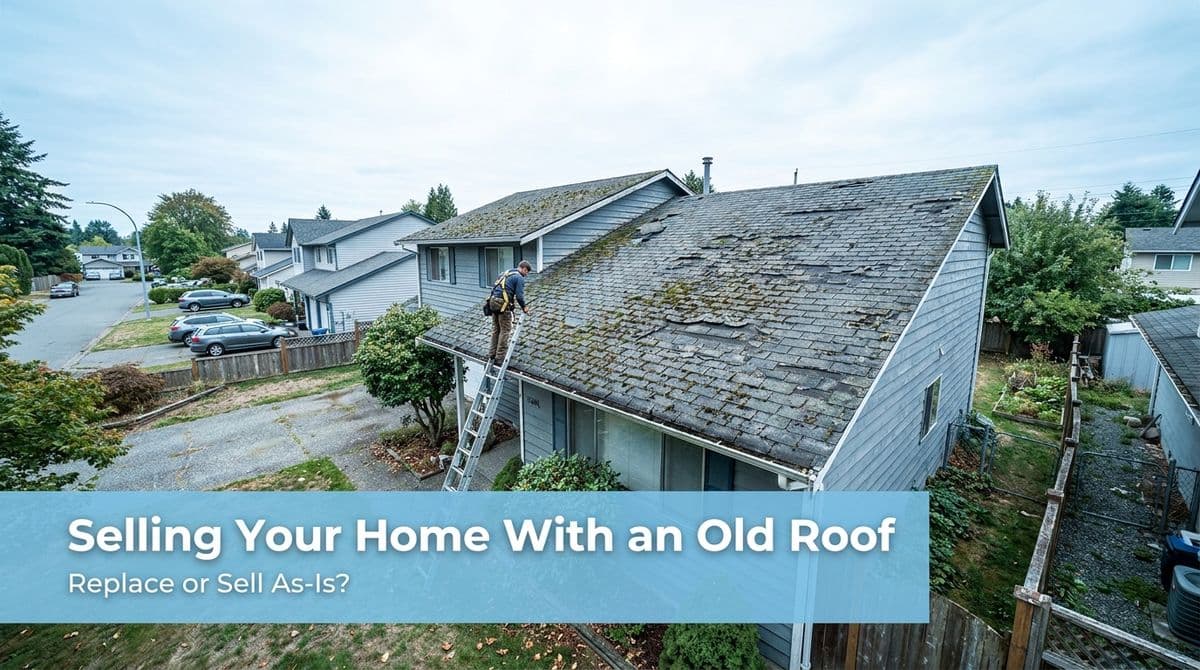
Getting Ready to Sell With a 25-Year-Old Roof
We recently got a call from a homeowner — let’s call him Frank — who was getting ready to put his house on the market. His roof was about 25 years old, and his real estate agent had told him what a lot of agents say in that situation: either replace the roof before listing, or be ready to deal with it during negotiations.
Frank told us he hadn’t had any leaks, and if he wasn’t selling, he wouldn’t even be thinking about the roof. What he really wanted was options. As he put it, he’d like to be able to tell a buyer one of two things:
- “Our roofer says this roof is good for another five years,” or
- “Our roofer will replace it for $X, and we’ve already adjusted our price to cover that.”
That’s a conversation we have all the time with our customers who are selling. If you’re in Frank’s shoes, you’re probably asking the same question: should you replace your older roof before you sell, or list the home as-is?
Step One: Get the Roof Honestly Evaluated
With Frank, the first thing we did as a team was schedule a roof inspection. Photos from the ground and a guess about age don’t tell the whole story. During an inspection, we look at:
- Shingle condition: granule loss, curling, cracking, and bare spots
- Flashing and penetrations: chimneys, vents, skylights, wall intersections
- Decking: soft spots that may indicate rot underneath
- Previous repairs: patches, mismatched shingles, or poor workmanship
- Signs of leaks: stains in the attic, rusted nails, or wet insulation
Frank’s goal was simple: he wanted us to tell him whether the roof truly had some life left, and if not, how much a replacement would cost so he could plan his pricing and negotiations.
Replace vs. Sell As-Is: How We Help Customers Decide
We walk homeowners through the same basic framework every time. Age matters, but it’s not the only factor. We look at:
- Actual condition: A 25-year-old roof with no major issues can sometimes be documented and sold as-is.
- Market expectations: In hotter seller’s markets, buyers may accept an older roof. In balanced or buyer’s markets, they tend to be pickier.
- Buyer financing: Some loan types (FHA, VA, certain conventional loans) may flag heavily worn roofs as a condition issue.
- Your cash position: Do you have funds to replace now, or would you rather offer a credit?
Then we talk through the two main paths.
Option 1: Replace the Roof Before You List
This is often the cleanest route if the roof is clearly at the end of its life. Here’s what we usually see with our customers:
- Stronger first impression: New roof photos stand out in listings and during showings.
- Fewer inspection surprises: Buyers’ inspectors can’t use the roof as leverage to drive the price down.
- Better for financing: Lenders are less likely to raise condition concerns.
We also see a decent return on investment in many price ranges. For example:
- On a $300,000 home, a roof might run $15,000–$20,000 depending on size and materials.
- Sellers often recoup most of that in higher offers, faster sale, or avoiding big buyer credits later.
We always provide a written estimate and photos, so you and your agent can decide whether a pre-listing replacement makes financial sense.
Option 2: Sell As-Is With Documentation and a Plan
Frank was leaning toward selling as-is, because he hadn’t had any leaks and did not have active roof insurance coverage to help with replacement. In a case like his, we help customers put together a clear plan:
- Document the roof condition: We provide photos and a written report with our findings and remaining life estimate if it’s reasonable to do so.
- Get a firm quote: We give a detailed replacement quote you can share with buyers.
- Decide on a credit strategy: Some sellers prefer to offer a closing credit instead of replacing the roof themselves.
That way, you can tell buyers something like, “We’ve had our roofer inspect the roof. They estimate about X years of life left and have quoted replacement at $Y. We’ve priced the home accordingly and are willing to discuss credits.”
Quick Cost and ROI Examples
Every home is different, but here are a few general examples we use when we talk with sellers:
- Entry-level home (~$250k): Roof might cost $10k–$15k. Not replacing could lead to buyers demanding a $15k–$20k reduction because they factor in hassle and risk.
- Mid-range home (~$400k): Roof might be $15k–$22k. A brand-new roof can easily make the home more attractive than similar listings and shorten time on market.
- Higher-end home ($600k+): Buyers often expect major systems to be updated. A visibly old roof can scare off otherwise qualified buyers or cause financing concerns.
We help our customers talk through these numbers with their real estate agent so everyone is on the same page.
Checklist Before You Call a Roofer
Before you reach out to a roofer, it helps to gather a few details. We suggest our customers ask themselves:
- How old is the roof (even an estimate helps)?
- Have you noticed any leaks, stains on ceilings, or attic issues?
- Have there been recent storms or past insurance claims?
- What is your target list date and price range?
- Are you open to replacing the roof, or are you hoping to sell as-is with a credit?
When we have that information up front, we can tailor our inspection and estimate to your goals, just like we did with Frank.
Common Questions We Hear From Home Sellers
Will a buyer’s lender care about my old roof?
Sometimes. If the roof shows obvious signs of failure — missing shingles, severe wear, active leaks — an appraiser or inspector may flag it, and the lender can require repairs or replacement before closing. A roof that’s simply old but still serviceable is less likely to cause trouble, especially if you have documentation from a licensed roofer.
Can I just offer a credit instead of replacing the roof?
Yes, and we see that approach a lot. Many of our customers use our written estimate as the basis for a closing credit or price reduction. The key is being realistic: buyers will usually want a credit that covers the full job and accounts for their inconvenience, so padding in a bit of extra value is common.
What if I don’t have roof insurance or recent storm damage?
Frank was in this situation — no active coverage on the roof and no significant hail or wind damage to justify an insurance claim. In cases like that, it becomes a straight cost–benefit decision: pay out of pocket now for a new roof, or adjust your pricing and be transparent with buyers using a roofer’s report and estimate.
How We Support Sellers With Older Roofs
When a homeowner calls us about selling with an older roof, we focus on three things:
- Honest evaluation: We tell you what we’d do if it were our own home.
- Clear documentation: Photos, notes, and estimates you can share with agents, buyers, and lenders.
- Flexible options: Replace now, sell as-is with a plan, or structure credits using our estimate.
If you’re planning to list your home and your roof is getting up there in age, we’re happy to walk you through the same process we used with Frank so you can list with confidence and fewer surprises at the closing table.